
The 9-Point Hail Damage Checklist Every Homeowner Needs Before Storm Season
Most hail damage is invisible from the ground and doesn't show up as a leak until months later. Print this checklist before storm season and know exactly what to look for - and what to do if you find it.

Editor
Ethan Walker
THE COMPLETE PRE-STORM SEASON HAIL DAMAGE CHECKLIST
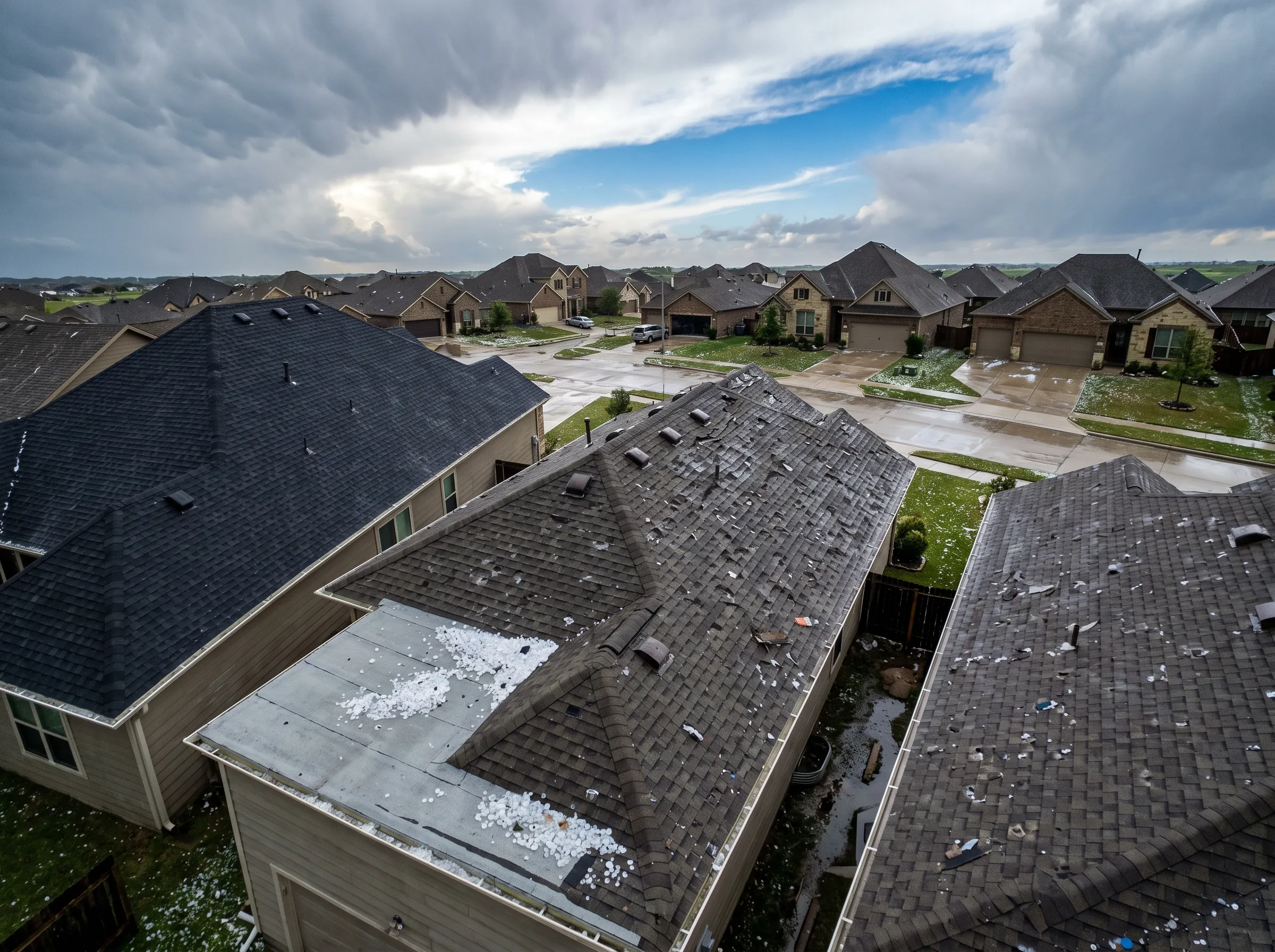
Hail damage is deceptive. A storm that drops golf-ball-sized hail can leave your roof looking intact from the street while the granule layer - your shingles' first line of UV and moisture defense - is completely stripped. By the time a leak appears, the damage is months old and significantly more expensive to fix.
KEY TOPICS COVERED IN THIS GUIDE
What Hail Damage Actually Looks Like - The difference between cosmetic damage and structural damage that triggers insurance replacement.
Where to Look First - The 4 areas of your property that show hail damage before the roof does.
The 9-Point Checklist - A printable inspection guide to run through within 24 hours of any hail event.
When to Call a Professional - The 3 signs that mean you need a certified inspector on the roof immediately.
WHAT HAIL DAMAGE ACTUALLY LOOKS LIKE ON A ROOF
On asphalt shingles, hail damage appears as dark circular impact spots where granules have been knocked away, exposing the grey asphalt mat underneath. On metal roofing, it shows as visible dents or dimples on the panel surface. On tile, cracks or chips along the edges and face of individual tiles. The critical thing to understand: granule loss is structural damage, not cosmetic - it accelerates UV degradation and dramatically shortens your roof's remaining lifespan.
THE 9-POINT HAIL DAMAGE CHECKLIST
Check your gutters and downspouts
Granule accumulation in gutters after a storm is one of the clearest signs of shingle impact damage. A heavy granule deposit means significant surface loss across the roof above.
Inspect your window screens
Hail that's large enough to damage a roof will dent or puncture aluminum window screens. Damaged screens are documented proof of hail size for your insurance claim.
Check your AC unit
The aluminum fins on your outdoor AC condenser dent easily in hail. Visible fin damage is another piece of carrier-ready evidence of the storm's impact intensity.
Look at your gutters and fascia for dents
Aluminum gutters and fascia boards dent at the same hail size that damages shingles. Walk the perimeter and photograph every dent you find.
Check your garage door panels
Steel garage doors show hail dents clearly. Photograph from an angle in raking light so the dents are visible in the images.
Inspect your painted wood surfaces
Hail leaves circular paint chips and impact marks on wood trim, fences, and deck railings. These document the storm's intensity for your adjuster.
Look at your roof from the ground with binoculars
Check ridge caps, valleys, and any visible field shingles for dark impact spots or missing granule areas. Do not get on the roof yourself.
Check your attic for daylight or moisture
After any significant storm, inspect your attic with a flashlight. Any daylight visible through the decking or moisture on the insulation means you need a professional on the roof immediately.
Call Roofex within 24 hours
If you find damage at any of the above 8 points, call before you call your insurer. We document everything in a carrier-ready report and meet your adjuster on the roof - at no cost to you.
WHEN TO CALL IMMEDIATELY
Call Roofex the same day if you observe any of the following: visible daylight through your attic decking, water stains appearing on interior ceilings within 48 hours of the storm, or hail larger than one inch in diameter reported in your zip code - even if you see no visible damage from the ground. Damage at that hail size is almost always present and simply not visible without a drone inspection.
